Gutter Installation Victoria
Installing & replacing new eavestroughs professionally
New gutter replacement & gutter installation services starts with a consultation. Contact us at 250-984-8131 for your free estimate!
New Gutters
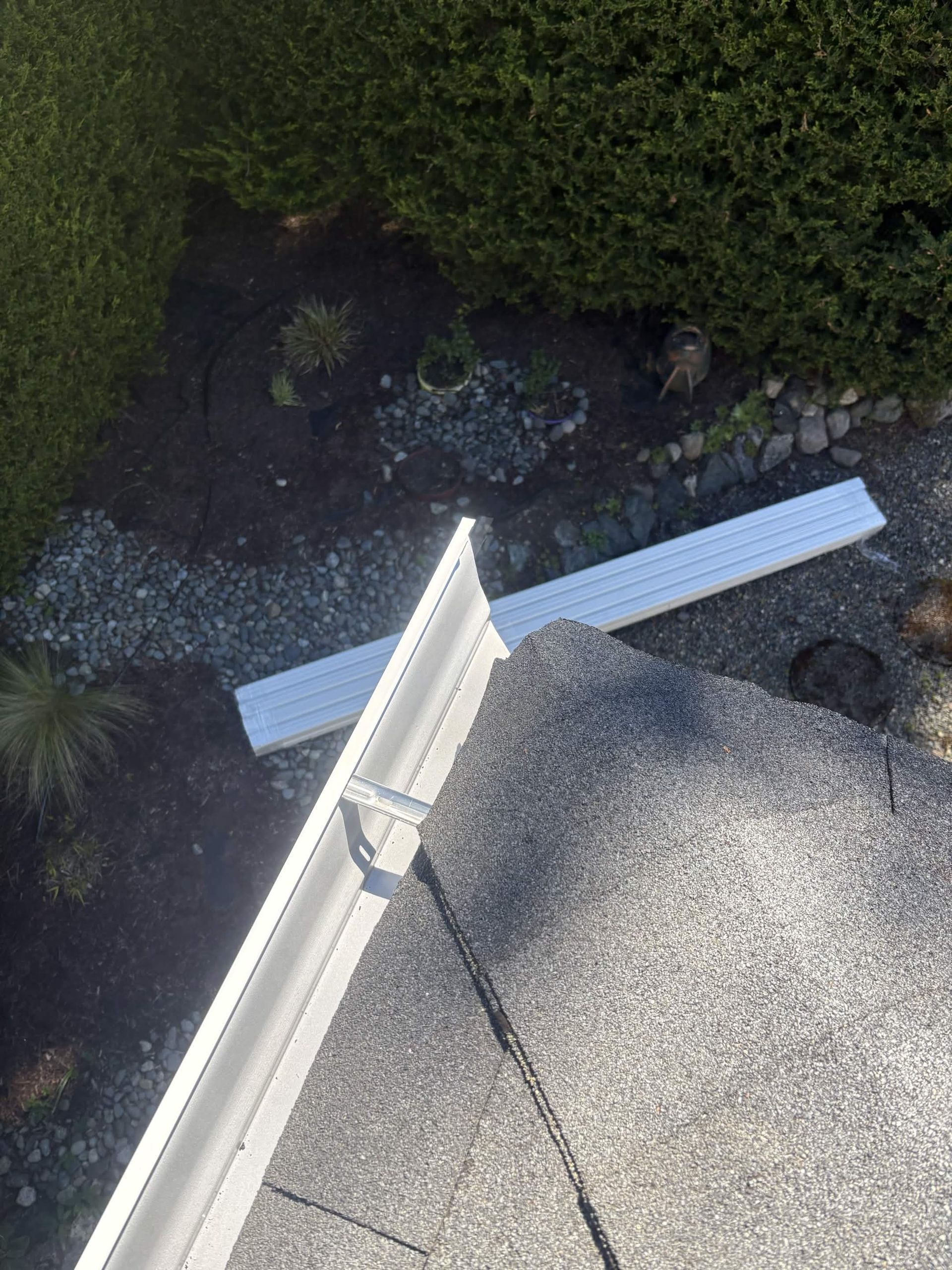
Our gutter machine produces new gutters that we use to replace existing damaged, old or dysfunctional existing eaves. We produce 5 inch k-style gutters, any color desired with the machine we have, but if you'd like a different style such as Box Bottom or Straight Face, we can source those as well.
Residential Gutter Installation
Victoria homeowners trust Victoria Moss Removal for residential gutter installation because we understand that a properly engineered 5-inch K-style seamless aluminum system is only half the solution in our uniquely damp coastal climate. Every residential gutter installation begins with a thorough assessment of roof pitch, existing fascia condition, tree canopy load, and the moss-driven organic debris cycle that causes most local systems to fail years earlier than they should.
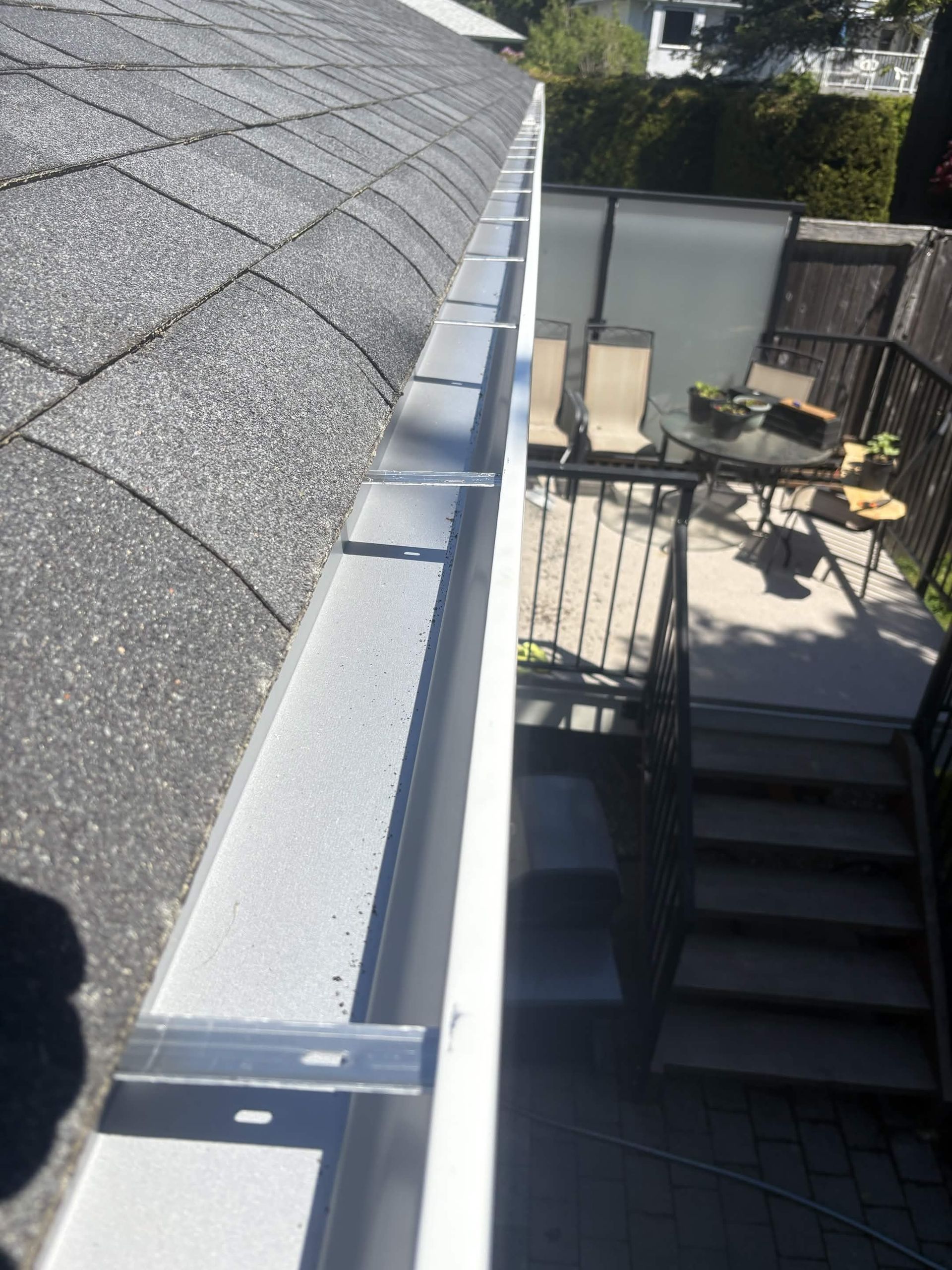
It's our knowledgeable practice that gives our gutters the best results: We (1) form continuous seamless runs on-site, (2) set precise slope for Victoria’s prolonged drizzle events, (3) space hidden hangers to handle the extra weight of wet needles and moss slurry, and (4) design downspout placement so water is carried safely away from foundations on the clay and rocky soils common across Greater Victoria, Saanich, Oak Bay, and the Westshore. The result is a residential gutter system that works in harmony with professional moss management, dramatically reducing overflow, fascia rot, and the need for constant cleaning while protecting the home for decades.
Commercial Gutter Installation
For commercial properties across Victoria and the Capital Regional District, Victoria Moss Removal delivers commercial gutter installation engineered for higher roof areas, more complex drainage demands, and the stricter performance expectations of multi-unit residential, retail, office, and light-industrial buildings. Our commercial teams install heavy-duty seamless aluminum systems sized and pitched to handle the greater water volumes and debris loads typical of larger roof planes, while accounting for the same local factors that defeat ordinary systems, including persistent coastal moisture, moss colonization at eaves, and fine needle accumulation from surrounding trees. We coordinate with property managers on access, phasing, and minimal business disruption, ensure proper discharge that respects municipal stormwater quality requirements, and integrate the new gutters with ongoing moss and roof-edge maintenance programs so the investment continues to perform year after year. From small commercial strips in Langford to larger facilities in Saanich and downtown Victoria, our commercial gutter installation approach prioritizes long-term reliability, reduced maintenance costs, and protection of the building under real Vancouver Island conditions.
Frequently Asked Questions And Answers About Greater Victoria Gutter Installation
Why do gutters in Victoria clog and overflow so much faster than in drier parts of BC or the Prairies?
Victoria’s climate normals show roughly 155 days per year with measurable precipitation, concentrated in long, mild, damp stretches rather than short intense storms. Combine that with dense tree cover (Douglas fir, western red cedar, arbutus, and ornamental pines) that continuously drop needles, scales, and lichen, plus the fact that moss itself colonizes the inside of gutters and acts like a sponge.
The result is a self-reinforcing cycle: (1) organic matter holds moisture, (2) moss grows, (3) flow capacity drops, (4) overflow keeps the eaves and fascia wet, (5) more moss on the roof and in the gutters. Most generic “clean twice a year” advice underestimates this local biology.
How does roof moss actually interact with my gutter system?
Moss on the roof holds water against the shingles via capillary action and slowly feeds organic slurry and granules into the gutters. When gutters are already partially blocked, that slurry has nowhere to go and backs up under the shingles or over the edge. Overflow then keeps the lower roof edge and fascia continuously damp, which is the exact microclimate moss prefers.
At Victoria Moss Removal we treat the two systems as one because installing new gutters without addressing the moss problem first simply restarts the cycle faster.
Is the standard 5-inch K-style gutter actually adequate for most Victoria homes?
Yes, for the majority of residential roofs in Greater Victoria. The 5-inch K-style (the profile most local machines form) has sufficient cross-sectional area for the rainfall intensities we typically see in the area, which is prolonged, moderate rain rather than tropical downpours. On very large or steep multi-plane roofs, or properties with heavy tree canopy that produce high debris loads, we sometimes discuss upsizing or adding extra downspouts. We form seamless runs on-site so there are no joints to leak under sustained flow.
What aluminum thickness (0.027" vs 0.032") makes sense on the Island?
The industry residential standard is 0.027-inch coil. In Victoria’s relatively mild wind and snow loads it performs well when properly hung. Heavier 0.032-inch material adds stiffness and a bit more dent resistance but is rarely necessary unless the run is unusually long or the fascia is compromised. We specify based on the actual house rather than upselling.
How much slope (pitch) should a gutter have in our climate?
Classic rule of thumb is 1/4 inch drop over 10 feet (or roughly 1 inch in 40 feet), but in practice we aim for a consistent, measurable fall toward the downspouts while keeping the gutter visually level from the ground. Too little slope causes water to pool during Victoria's multi-day drizzle events; too much and the high end can look odd or leave the far end under-capacity. We check slope with a level and water test after each install so you can rest easy knowing it'll function well in a downpour.
Why do some new gutters still pull away from the fascia after a couple of wet winters?
Gutters pull away from the fascia usually because of inadequate hanger spacing or the wrong hanger type for the load. Victoria’s prolonged saturation adds significant water weight plus the weight of wet organic debris. Hidden hangers (screwed into the rafter tails or fascia) every 24 inches or closer on longer runs, combined with proper fastener length into solid wood, prevents the sagging that eventually pulls spikes or brackets out. We also inspect the fascia itself, because rotted or thin fascia is a common hidden failure point after years of previous overflow. You'll know right away from our team if this is the case for you, and can help you solve the problem so your gutters won't sag.
Do gutter guards actually work with our needle-heavy trees?
They reduce large leaf loads but struggle with the fine needles and “roof sand” (asphalt granules) common here. On properties surrounded by pines or firs, guards can turn into a maintenance headache because needles pack into the openings and the only way to clean thoroughly is to remove the guards. We are honest about this, because, for many Westshore and Saanich properties with dense conifers, a well-maintained open gutter cleaned on a proper schedule outperforms poorly matched guards. This means it's sometimes smarter to not have gutter guards, as they'll make the need for maintenance higher depending on how many needles are clogging the system.
How does coastal salt air affect aluminum gutters in Victoria?
The Strait of Juan de Fuca and proximity to the ocean means higher airborne salt and moisture compared to inland BC. It's true, quality baked-enamel finishes and proper end-cap/sealant details matter more here than in the Interior. That's why we use coil stock designed for exterior exposure and pay attention to cut edges and fastener materials so galvanic corrosion does not start at the joints or hangers. So long as everything is installed correctly, which we always do, there's no need for homeowners to worry, although this is something we consider on every job so you don't have to.
Should downspouts discharge onto the lawn, into a rock bed, or be tied into the storm system?
Where your downspouts discharge depends on the property and municipal rules. Direct discharge onto saturated clay or poorly draining soils can create surface pooling and foundation pressure. Many homeowners prefer rock-filled splash blocks or short extensions that keep water 4 to 6 feet away from the foundation. In some municipalities within the CRD there are expectations around clean water only entering the storm system, which means debris, moss slurry, or cleaning chemicals are not welcome. We design the discharge with both building protection and local stormwater quality in mind for the overall benefit of your home or business.
What is the real lifespan of seamless aluminum gutters in Greater Victoria?
With proper installation, regular cleaning, and no major tree impacts, a 20 to 30+ year lifespan for gutters is realistic. The limiting factors here are usually not the metal itself but (1) fascia rot from previous overflow, (2) hanger failure under wet debris load, and (3) physical damage from ladders or falling branches. Pairing new gutters with moss management dramatically extends both roof and gutter life.
Why do north-facing and shaded elevations need special attention?
North and heavily shaded elevations stay wet longer after each rain event, which means moss and algae colonize faster, granules wash off more readily, and the gutters on those sides receive a higher organic load. When we design a system we often increase downspout capacity or cleaning frequency recommendations for those elevations to compensate, giving home and business owners peace of mind.
Is there any benefit to copper or steel gutters here?
Copper is beautiful and antimicrobial (it can slightly inhibit moss/algae near the edge), but the cost is substantially higher and it develops a patina that not every homeowner wants. Galvanized or painted steel is durable but heavier and more prone to visible rust staining if the coating is damaged. For the vast majority of Victoria homes, properly finished aluminum remains the practical sweet spot of cost, weight, and longevity.
How do you handle installations on older homes with non-standard fascia or heritage constraints?
Many Victoria and Oak Bay homes have narrow, irregular, or partially deteriorated fascia. For these types of homes and buildings, we assess whether sistering (attaching new lumber), replacement, or custom brackets are required before forming the gutter. On heritage properties we can match colours closely and keep the gutters low-profile so the they don't dominate the elevation. Because these buildings are older, it's even more important to ensure they do have professional gutter protection, so let us know if you have more questions about installing gutters on your heritage site over the phone.
What happens to the old gutters and the debris we remove?
We remove and dispose of the old material responsibly for you, by recycling and disposing at the dump. Organic debris and moss slurry are handled so they do not simply get washed into the storm system.
How often should gutters really be cleaned in different parts of Greater Victoria?
Baseline is twice a year (late summer/early fall before the heavy leaf drop and again in late winter/early spring). Properties under dense conifers or with significant roof moss often need professional gutter cleaning three times per year. Westshore and other areas with heavier tree cover generally need more frequent attention than more open Saanich or downtown lots. We offer service plans that include free roof-and-gutter inspections precisely because the interval is site-specific.
Can new gutters reduce how often I need moss removal on the roof?
Indirectly yes. When gutters move water away efficiently, the lower roof edge and eaves dry faster. That slows the feedback loop that keeps the bottom courses of shingles chronically damp. Combined with proper moss treatment, the regrowth interval lengthens.
What technical details should I look for in a quote that most companies skip?
Things you should look out for in a gutter installation quote include (1) hanger type and spacing, (2) exact aluminum thickness and finish, (3) number and placement of downspouts sized to the roof area, (4) slope verification method, (5) fascia condition assessment, and (6) whether the quote includes proper end-cap and mitre sealing. Also ask how they handle the inevitable moss and needle load in the first 12 to 24 months, which as moss removal experts is something we always consider and explain.
Why do some “seamless” installations still leak at the corners or end caps?
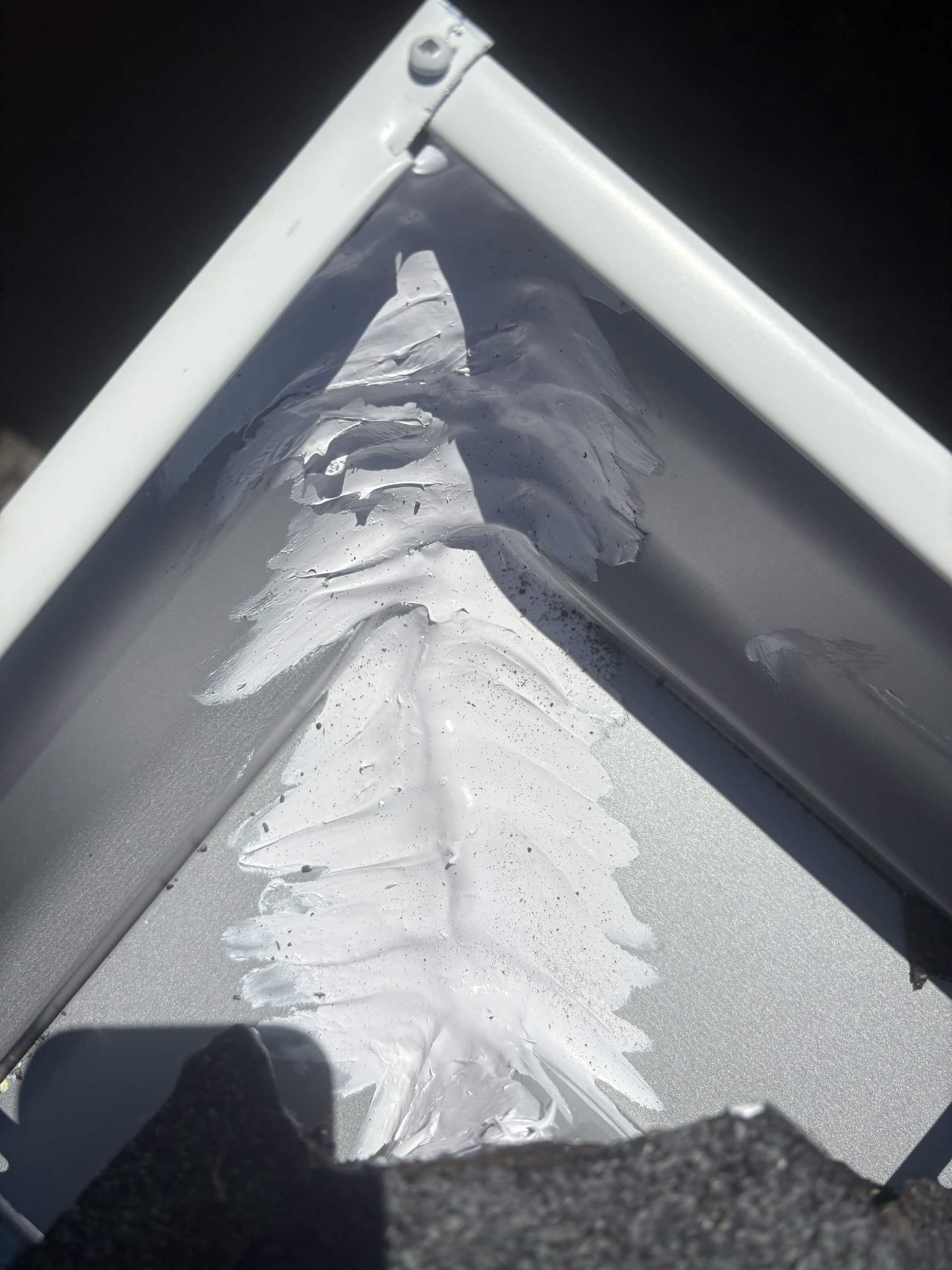
Seamless refers to the long runs, but corners, end caps, and downspout outlets are still joints, which is unavoidable. Those joints rely on mechanical fit plus high-quality sealant to prevent leaks. In our climate the sealant is stressed by repeated wet-dry cycles and temperature swings. We use appropriate exterior-grade sealants and mechanical fastening so the joints stay tight for years, and whether your gutter sealant needs repairs is something we check during routine cleaning so you don't have to worry.
How does gutter installation fit into a full exterior maintenance plan for a Victoria home?
Gutters are one node in a system that includes roof surface, fascia/soffit condition, downspout discharge, and ground drainage. At Victoria Moss Removal, we routinely combine moss treatment, gutter cleaning or replacement, and inspection of the related wood elements because fixing only one piece leaves the others to recreate the original problem. Therefore it's safe to say that gutter isntallation will fit into your exterior maintenance plan only if these other facets aren't taken care of. As long as we're out there inspecting, cleaning, and repairing your roof, gutters, fascia, and drainage as needed every year, and so long as there is no major damage, you shouldn't need to replace gutters for up to 30+ years. Often we're replacing gutters where these other elements were slacking, and get homeowners on the right track to get the most out of their investment.
What is the single most common mistake homeowners make when replacing gutters in this climate?
Treating the gutters as an isolated product instead of part of the moisture-management system of the whole roof edge is the biggest mistake in Victoria. This comes in the form of (1) installing beautiful new seamless gutters while leaving heavy moss on the roof, (2) failing to correct fascia rot, or (3) choosing guards mismatched to the local debris type which simply moves the failure point a year or two down the road. The highest-value work addresses the entire eaves assembly and the biological load that Victoria’s climate continuously supplies, which is why hiring professional gutter installers like us who consider all these things is a recommended course of action.